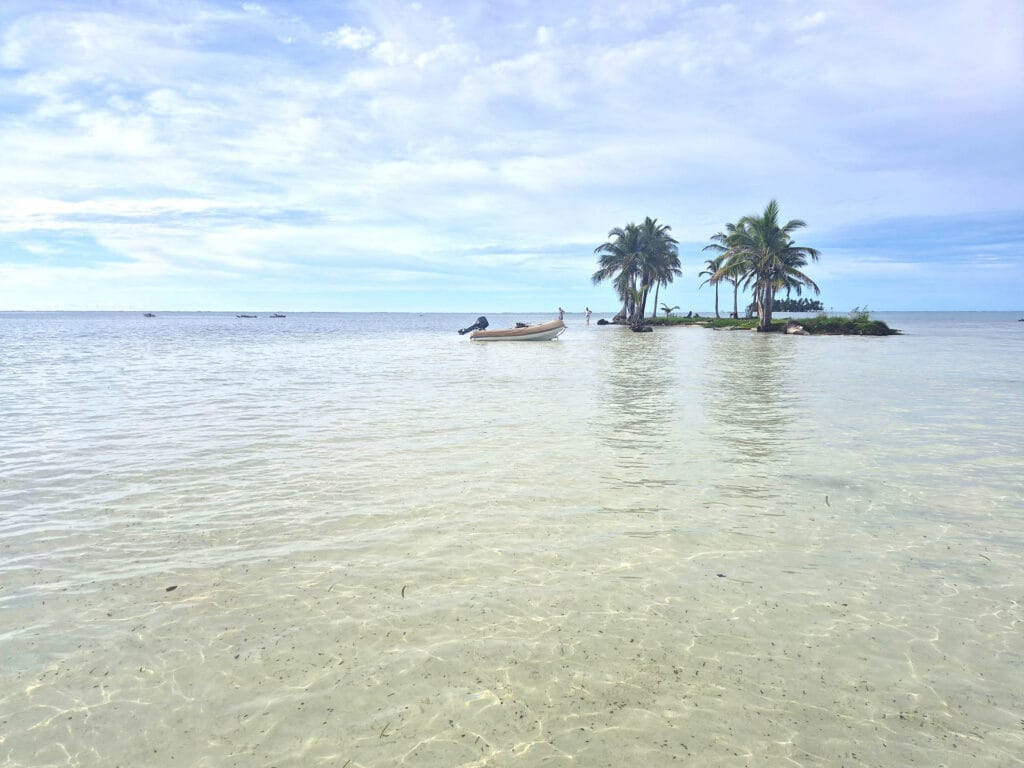
The Guna Yala archipelago (formerly San Blas) is a mosaic of more than three hundred islands scattered along Panama’s Caribbean coast. It is home to the Guna people – a nation with a strong identity, language, and traditions that fought for broad autonomy in the 20th century and still carefully preserve their culture and relationship with the sea.
Where the Guna Come From and How They Live Today
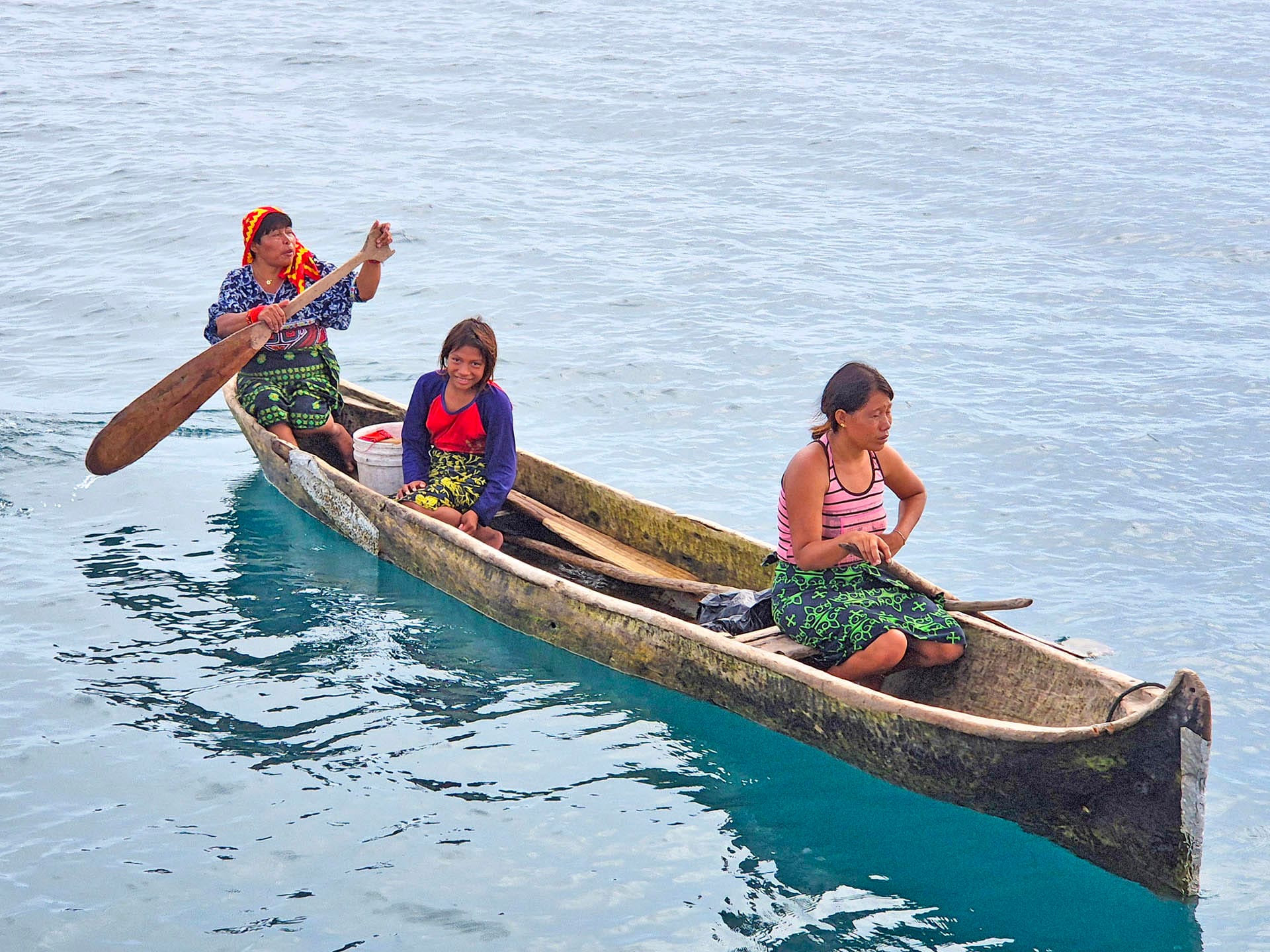
The origins of the Guna trace back to what is now northern Colombia and Panama. Today, they live mainly in the autonomous province of Guna Yala and several other communities in Panama and Colombia. Many families live in wooden houses with palm-thatched roofs, and their daily rhythm follows the sea, fishing, cultivation of basic crops, and trade with the mainland. Travel between islands or to the mainland is done in traditional dugout canoes called cayuco, now often fitted with small motors.
Language, Identity, and Mola – The “Sewn Chronicle” of the Guna
The Guna speak their own language (often called Dulegaya/Duleguna), which coexists with Spanish. One of the most visible symbols of their identity is the mola – layered textile appliqués featuring geometric and natural motifs that have become both an art form and a source of livelihood. Each mola is unique and often tells a story about animals, plants, the sea, or daily life.
Society and Traditional Authorities
Guna communities operate through local assemblies (congreso) led by traditional authorities who oversee adherence to customs and community rules. Decisions are made collectively, with an emphasis on unity and respect – for family, elders, nature, and guests.
Worldview and Relationship with Nature
For the Guna, the sea, coastal rainforest, and coral reefs are all parts of one interconnected world. Many communities have clear rules for waste management, behavior at sacred sites, and protection of fragile environments (bird nesting areas, coral gardens). Visitors are welcome as long as they respect these rules.
Celebrations, Music, and Daily Life
Music, dance, and singing accompany life’s milestones – from initiation rituals to community celebrations. Everyday life follows a gentle rhythm: fishing at dawn, afternoon net and canoe repairs, making molas, and evening gatherings in community houses. In many villages, traditional adornments and clothing are still worn, as older generations pass their skills to the young.
Visitor Etiquette: How to Act with Respect
To keep the relationship between guests and the local community friendly and balanced, we recommend a few simple rules:
- Always ask for permission before photographing people, especially women and children.
- Dress appropriately when entering villages (covered shoulders, T-shirt, knee-length shorts; swimsuits belong on the beach or yacht).
- Speak respectfully and, if welcomed, greet locals with a few words in their language (for example, a simple “Namagge” – hello/good day – will make them smile).
- Buy locally: molas, bracelets, fruit, and fish. Carry small bills (1–10 USD) to make transactions easier and avoid change issues.
- Leave the place better than you found it: no littering, don’t touch corals, and don’t take anything from the beaches.
Guna Yala and Sailing Freedom: In Harmony with the Local Community
We plan our routes and daily routines in line with Guna Yala’s rules, ensuring benefits for the local communities:
- Cooperation with communities: we work with local guides for village and nature visits; fees and contributions go directly to the communities.
- Buying local: we purchase fresh fish, fruit, and vegetables directly from island fishermen and families. We encourage guests to buy molas and handmade crafts – fair souvenirs with a story.
- Small groups, quiet anchorages: we prefer calm bays and let nature breathe (no loud music during sensitive times, respect for bird nesting areas).
- Safety and environmental sensitivity: we anchor with care for coral gardens and seagrass; use a watermaker and minimize single-use plastics. Solar panels and a generator provide clean energy and comfort, while Starlink internet is used mindfully – without disturbing the experience of the place.
- Privacy and respect: the crew has a separate cabin with its own entrance to maintain guests’ peace while remaining available for communication with local authorities.
Want to experience Guna Yala authentically and respectfully? See what the cruise looks like, read our travel information, and check what’s included. Find available dates here: choose your dates.
Practical Notes and FAQs
- Entry fees and permits: some islands or lagoons charge community fees, which we handle during the cruise. Follow the crew’s and local guides’ instructions when entering villages.
- Drone photography: allowed only with local authority approval; in many areas, drones are restricted or prohibited. We’ll advise you where it’s appropriate.
- Gifts and exchanges: instead of giving candy to children, we encourage fair purchases of goods (molas, fruit, fish) from adults – supporting the community sustainably.
- When to visit: Guna Yala is accessible year-round; while weather varies, hurricanes don’t occur here. The dry season offers more sun and wind, while the “green” season brings fewer visitors and lush nature.
In Conclusion
The history and traditions of the Guna people give the Guna Yala archipelago its unique atmosphere. When approached with respect, visitors take home not only beautiful photos but a sense of genuine connection. That’s how we sail – quietly, thoughtfully, and in harmony with those who call this paradise home. Book your journey responsibly – choose your dates.